
Dolphins of the Red Sea- Species, Habitats and Conservation
Home → Red Sea Discoveries → Dolphins of the Red Sea
Dolphins of the Red Sea: Species, Habitats and Conservation
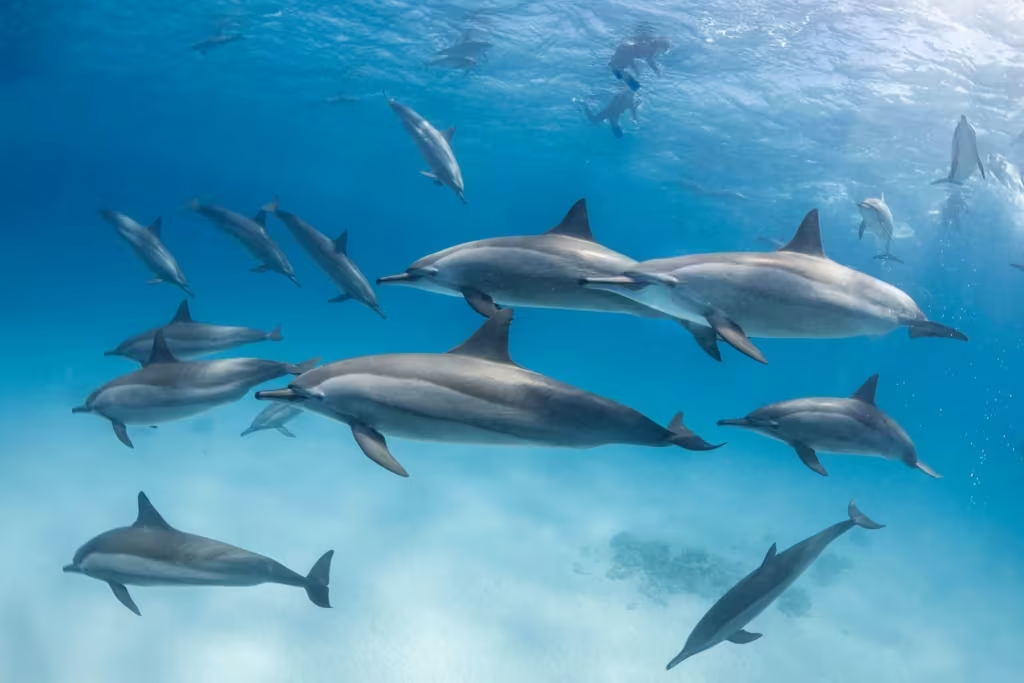
There is something special about seeing a dolphin in the wild. One moment the sea looks completely still; the next, a curved fin appears above the water, followed by another. Sometimes a whole group moves across the surface together before disappearing beneath the waves.
For many visitors, encountering dolphins is one of the most memorable experiences associated with Egypt’s Red Sea coast. But these animals are much more than an attraction. They are intelligent marine mammals with complex social lives, particular habitat needs and an important place in the marine ecosystem.
The Red Sea is home to several dolphin species, from energetic spinner dolphins to the familiar bottlenose dolphins. Some live in offshore waters, while others regularly use coastal reefs, islands and sheltered areas.
Understanding where dolphins live, how they behave and what threatens them helps us appreciate these animals beyond the excitement of a possible sighting.
Which Dolphin Species Live in the Red Sea?
The Red Sea supports a surprisingly diverse community of whales and dolphins, collectively known as cetaceans. Scientific research has documented 16 cetacean species in the region, although not all are equally common or regularly encountered.
Among the dolphins, several species are particularly relevant to Egypt’s Red Sea coast.
Spinner Dolphins
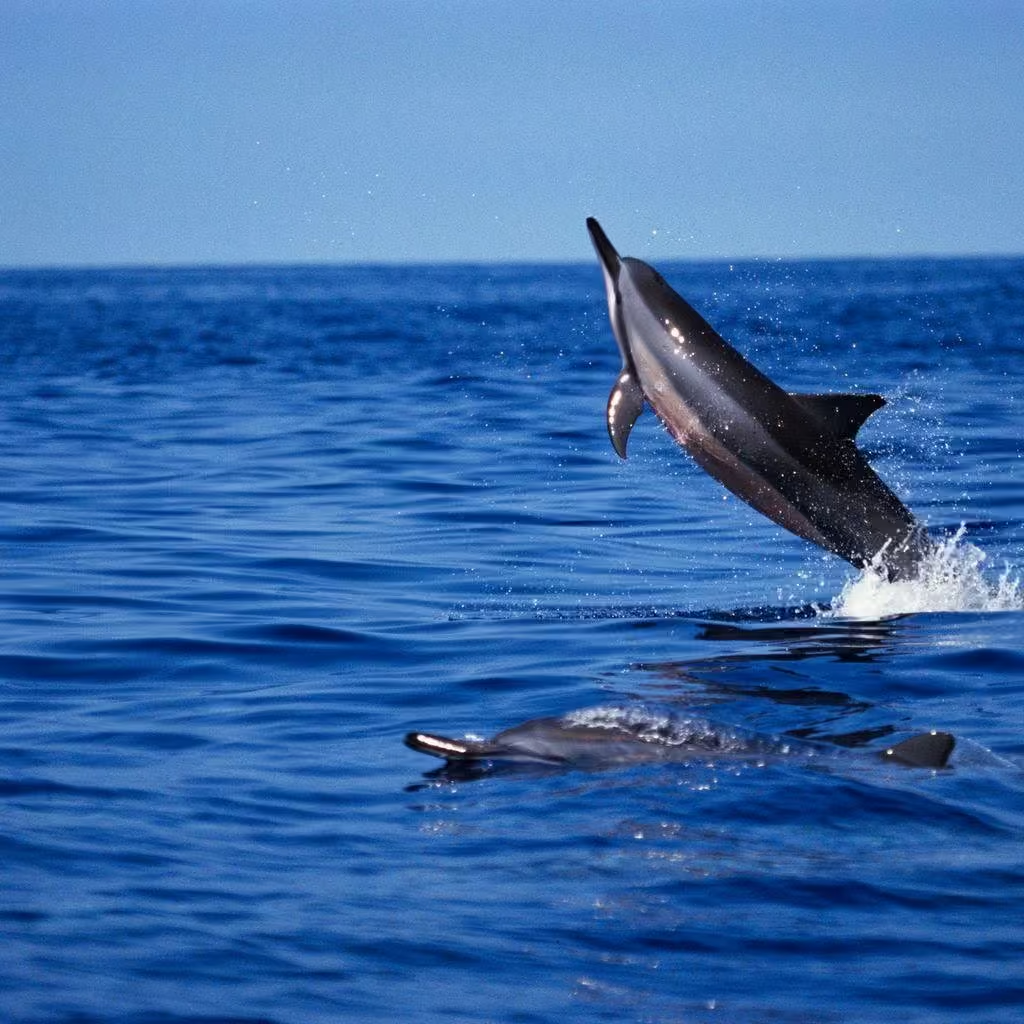
The spinner dolphin (Stenella longirostris) is one of the most recognisable dolphins in the Red Sea. It is famous for its energetic leaps and repeated spins above the water, which give the species its name.
Spinner dolphins often travel in groups and feed mainly on fish and squid. Their feeding activity commonly takes place in deeper water, sometimes at night, when many prey animals move closer to the surface.
During the day, some groups use sheltered reefs and lagoons as resting areas. This behaviour is especially important in southern Egypt, where places such as Samadai Reef and Satayah Reef are known for their spinner dolphin populations.
Indo-Pacific Bottlenose Dolphins
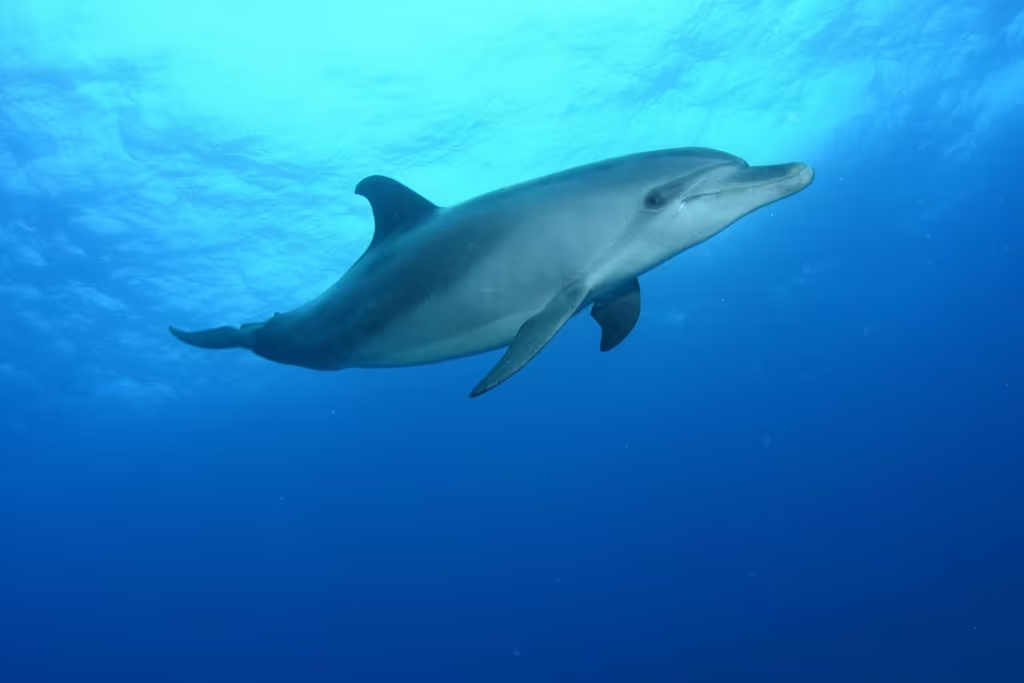
The Indo-Pacific bottlenose dolphin (Tursiops aduncus) is another important species found along Egypt’s Red Sea coast.
These dolphins are closely related to common bottlenose dolphins but are recognised as a distinct species. They are generally found in coastal and offshore reef environments, where they search for fish and other prey.
Indo-Pacific bottlenose dolphins are documented around the northern Red Sea islands near Hurghada. They are social animals and are often seen travelling in groups.
Other Dolphin Species
Other dolphin species have also been recorded in the Red Sea, including pantropical spotted dolphins, Risso’s dolphins and Indian Ocean humpback dolphins.
Their distribution and frequency of sightings vary. Some are associated with offshore waters, while others are more closely connected to coastal habitats.
This diversity is one reason the Red Sea is an interesting region for marine mammal research.
Where Can You See Dolphins in Egypt’s Red Sea?
Dolphins can be found in different parts of the Red Sea, but certain locations are particularly well known because of the habitats they provide.
It is important to remember that dolphins are wild animals. Even in places where they are regularly observed, a sighting is never guaranteed.
Dolphin Habitats Around Hurghada
The waters around Hurghada contain a network of offshore islands, coral reefs, shallow bays and lagoons. These habitats support a resident population of Indo-Pacific bottlenose dolphins, as well as other marine mammals.
Some of the known dolphin areas include Shaab El Erg, Shaab Fanous, Abu Nugar, Umm Gamar and the waters around Shadwan and Gubal Islands.
The northern Red Sea islands are especially important because they provide a variety of habitats within a relatively compact marine area.
Samadai Reef – The Famous Dolphin House Near Marsa Alam
Samadai Reef, often called Dolphin House, is one of Egypt’s best-known locations for spinner dolphins.
The reef is located offshore from Marsa Alam. Its sheltered lagoon provides an important resting habitat for dolphins that spend much of their feeding time in deeper waters.
Researchers have studied the dolphins using this reef and documented how they use its protected areas during the day.
Samadai is also an important example of how tourism and wildlife conservation need to be managed together. Access restrictions and designated zones have been introduced to help protect the dolphins’ resting habitat.
Satayah Reef – A Remote Dolphin Habitat
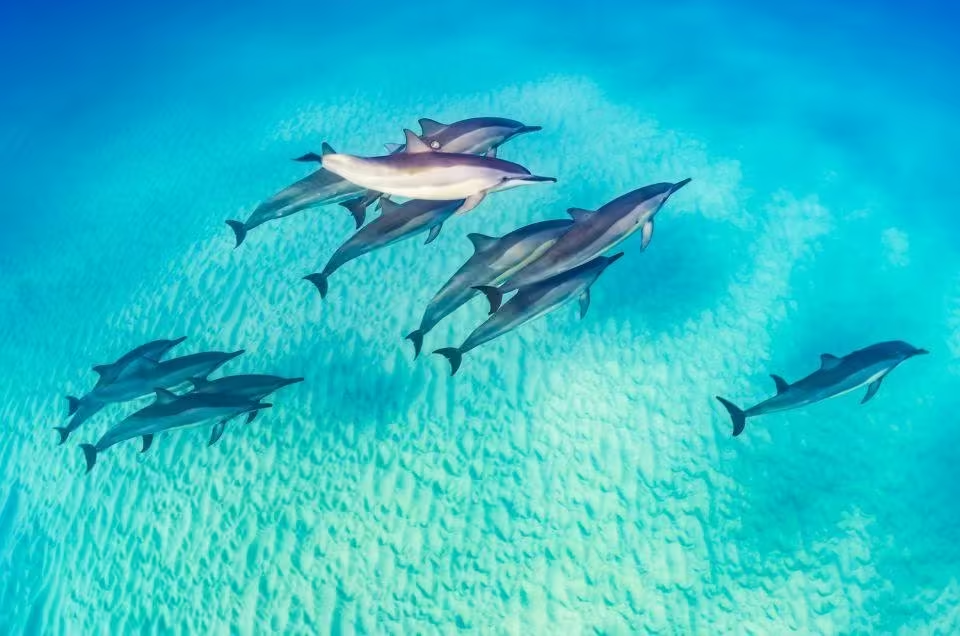
Satayah Reef, sometimes known as Dolphin Reef, is located farther south near the Hamata area.
It is another well-known location associated with spinner dolphins. Its remote position and surrounding marine environment make it an interesting part of the southern Red Sea.
However, popularity with visitors can bring pressure on wildlife. The way boats and swimmers approach dolphins matters, especially when animals are using a reef as a resting place.
Why Do Spinner Dolphins Gather Around Reefs?
One of the most interesting things about spinner dolphins is that they use different parts of the sea for different activities.
At night, they often move into deeper water to feed on fish and squid. Some of their prey species migrate vertically through the water column, making them easier to find during certain hours.
During the day, spinner dolphins may return to sheltered reefs and lagoons to rest and socialise.
These resting areas are not simply convenient places to visit. They are important parts of the dolphins’ daily routine.
A reef that looks quiet to a visitor can therefore be a very important place for the animals living there. Repeated disturbance from boats, engines and swimmers can interfere with the time dolphins need to rest.
This is why responsible dolphin tourism must consider more than whether visitors can see the animals.
How Do Dolphins Communicate and Live Together?
Dolphins are highly social marine mammals. They use sounds, body movements and physical behaviour to communicate with one another.
Their communication includes whistles, clicks and other sounds. Some sounds are associated with social interactions, while echolocation clicks help dolphins detect objects and locate prey underwater.
Groups of dolphins may travel, feed and rest together. Their social relationships can be complex, with individuals forming associations that change over time.
Mother dolphins also maintain close relationships with their calves. Young dolphins depend on their mothers for protection, guidance and nourishment during their early lives.
Watching dolphins move together can look effortless, but their behaviour reflects a sophisticated social world beneath the surface.
What Do Dolphins Eat in the Red Sea?
Dolphins are predators, and their diet depends on their species, location and available prey.
Many Red Sea dolphins feed on different types of fish and squid. Some species hunt in deeper water, while others search for food around coastal reefs and sandy seabeds.
Spinner dolphins often feed on small fish and squid in deeper offshore waters. Bottlenose dolphins have a varied diet and may hunt different fish and other marine animals depending on their habitat.
Their feeding behaviour also shows why healthy marine ecosystems matter. Coral reefs, seagrass beds and open-water environments all contribute to the food resources available to marine life.
Are Dolphins in the Red Sea Endangered?
The conservation status of dolphins is not the same for every species. Each species has its own population trends, distribution and conservation assessment.
However, dolphins in the Red Sea face several pressures connected to human activity.
Disturbance from Dolphin-Watching Boats
One of the most direct concerns is repeated disturbance in areas where dolphins rest.
When several boats approach a group at the same time, or swimmers repeatedly enter the water around them, dolphins may change their behaviour or move away.
Research conducted at Egyptian spinner dolphin sites found that interactions with boats and swimmers could disrupt resting behaviour, particularly where tourism activity was less controlled.
Marine Pollution and Plastic Waste
Plastic bags, discarded fishing equipment and other waste can harm marine animals.
Dolphins may become entangled in fishing gear or accidentally ingest plastic. Pollution can also affect the fish and other organisms that form part of their food supply.
Keeping rubbish out of the sea is a simple but important part of protecting marine life.
Fishing Activity and Habitat Pressure
Fishing activity can affect dolphins through accidental entanglement, changes in prey availability and other interactions with fishing equipment.
Coastal development and pressure on marine habitats can also affect the wider ecosystem that dolphins depend on.
Protecting dolphins therefore involves looking after the health of the entire marine environment.
How Can Visitors Watch Dolphins Responsibly?
Seeing dolphins in their natural habitat can be an unforgettable experience, but the animals should always come first.
Responsible dolphin watching means allowing dolphins to behave naturally rather than trying to control an encounter.
Here are some important principles:
- Never chase dolphins with a boat or attempt to surround a group.
- Do not touch, feed or attempt to ride wild dolphins.
- Keep noise and sudden movements to a minimum.
- Never force an interaction by jumping into the water near resting animals.
- Follow local rules, protected-area restrictions and the instructions of qualified guides.
- Choose operators who respect wildlife guidelines and do not promise guaranteed encounters.
- Never leave rubbish or fishing equipment in the sea.
At Samadai Reef, designated zones and access rules have been developed to reduce disturbance to resting spinner dolphins. These measures demonstrate why responsible management is essential when wildlife encounters become popular with visitors.
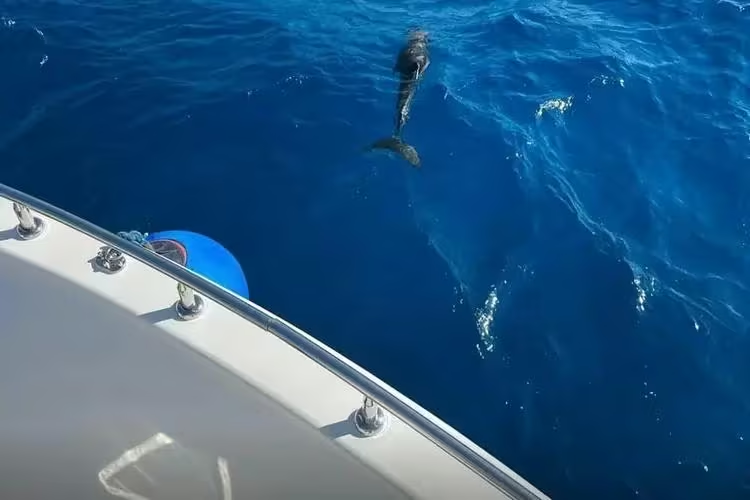
A good wildlife encounter is not measured by how close someone gets to a dolphin. It is measured by whether the animal can continue its natural behaviour without being disturbed.
Why Dolphins Matter to the Red Sea Ecosystem
Dolphins are part of a much larger marine food web. As predators, they help shape the populations of the animals they feed on.
Their presence is also of scientific interest because studying dolphins can help researchers understand marine biodiversity, animal behaviour and the condition of important habitats.
However, dolphins should not be viewed as a simple indicator that the whole marine environment is healthy. Ecosystems are complex, and their condition needs to be assessed through many different kinds of research.
Protecting dolphins means protecting the wider environment they depend on, including coral reefs, seagrass areas, open waters and the many smaller organisms that support marine food chains.
The Red Sea is valuable not only because of its beautiful underwater scenery, but also because of the life that depends on it.
Dolphins are not the only remarkable animals that depend on this connected marine environment. Sea turtles also move between different habitats, including seagrass feeding grounds and coral reef ecosystems. Their journeys reveal another fascinating side of the Red Sea’s biodiversity. Read more in our guide to the Sea Turtles of the Red Sea.
Frequently Asked Questions About Dolphins of the Red Sea
1. What types of dolphins live in the Red Sea?
Several dolphin species have been recorded in the Red Sea. These include spinner dolphins, Indo-Pacific bottlenose dolphins, common bottlenose dolphins, pantropical spotted dolphins and Risso’s dolphins, among others.
2. Can you see dolphins in Hurghada?
Yes. Dolphins are documented in the waters around Hurghada, particularly around offshore reefs and islands. However, they are wild animals, so sightings cannot be guaranteed.
3. Where is Dolphin House in Egypt?
The name Dolphin House is used for more than one location. Samadai Reef near Marsa Alam is particularly famous for its spinner dolphins, while areas around Hurghada also have well-known dolphin habitats.
4. What is the difference between spinner dolphins and bottlenose dolphins?
Spinner dolphins are generally more slender and are famous for their spectacular spinning leaps above the water. Bottlenose dolphins have a more robust body, a shorter beak and a different swimming style. Both species inhabit the Red Sea, but they have different behaviours and habitat preferences.
5. What is the best time to see dolphins in the Red Sea?
Dolphins can be observed throughout the year in parts of the Red Sea. Some locations experience seasonal changes in sightings, but there is no guaranteed month or time for an encounter.
6. Do dolphins sleep underwater?
Dolphins do not sleep in the same way humans do. They use a form of unihemispheric sleep, in which one half of the brain rests while the other remains active enough to support breathing and awareness.
7. Is it safe to swim with wild dolphins?
Swimming near wild dolphins is not automatically safe or appropriate. They are powerful wild animals, and close interactions can disturb them or create risks for people. Visitors should follow local regulations and never chase or touch dolphins.
8. How can tourists help protect dolphins in Egypt?
Visitors can choose responsible wildlife operators, follow protected-area rules, avoid touching or feeding dolphins, keep their distance and never leave rubbish in the sea. Respecting the animals’ space is one of the most useful things visitors can do.
Further Reading: Dolphin Research and Conservation
For readers who would like to explore the subject in more depth, these organisations provide scientific information and conservation resources:
- International Whaling Commission – Egypt: Information about dolphin and whale watching, species and responsible tourism in Egypt.
- HEPCA – Red Sea Dolphin Project: Research and conservation work focused on dolphins in the Egyptian Red Sea.
- Convention on Migratory Species – Cetaceans of the Red Sea: A scientific review of whale and dolphin species recorded in the region.
- Royal Society Open Science – Spinner Dolphins and Human Interactions: Published research examining how tourism activities affect spinner dolphins in Egypt.
Discover More About the Red Sea
The dolphins of the Red Sea are part of an extraordinary marine environment that deserves to be understood and protected. From spinner dolphins resting inside sheltered reefs to bottlenose dolphins moving around offshore islands, each species has its own place in this underwater world.
The next time a dolphin appears above the surface, it is worth remembering that you are witnessing a wild animal going about its own life. Giving it space is one of the simplest ways to show respect for the Red Sea.
This article is presented by Private Taxi Hurghada, a local airport transfer service based in Hurghada, Egypt, sharing useful information and local insights about the Red Sea region.
 English
 German