
Turtles Hidden Journey Through Egypt’s Waters
Sea Turtles of the Red Sea: Their Hidden Journey Through Egypt’s Waters
A sea turtle can spend years travelling through the ocean without ever being noticed by the people living along its shores. It may feed quietly above a seagrass meadow, move between coral reefs, cross large stretches of open water and eventually return to a beach to lay its eggs.
Along Egypt’s Red Sea coast, this journey connects places that might appear completely separate to us: remote islands, sandy nesting beaches, underwater grasslands and coral reefs.
Sea turtles are among the most fascinating animals in the Red Sea. Yet their importance goes beyond their appearance or the excitement of seeing one while snorkeling. Their movements reveal how different marine habitats are connected, and their survival depends on keeping those habitats healthy.
This is the story of the sea turtles of the Red Sea: the species that live here, the journeys they make, the places they depend on and the challenges they face in an increasingly developed coastal environment.
Which Sea Turtles Live in the Red Sea?
Several sea turtle species have been recorded in the wider Red Sea region. However, not all are equally common, and only some regularly nest along the Egyptian coastline.
Two species are particularly important to Egypt’s Red Sea marine environment: the green sea turtle and the hawksbill sea turtle.
Green Sea Turtle
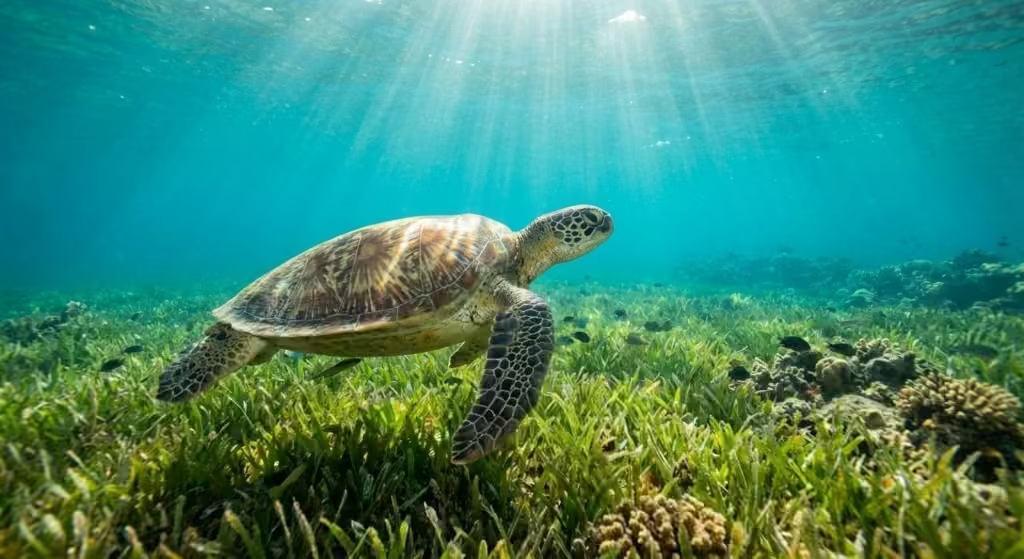
The green sea turtle (Chelonia mydas) is one of the most recognisable marine turtles in the region.
It has a relatively smooth, rounded shell and a broad head. Adults are often associated with shallow coastal waters where seagrass meadows provide an important food source.
Despite its name, the green turtle is not named after the colour of its shell. The name refers to the greenish colour of its body fat, which is associated with its diet.
Green turtles are especially interesting because they connect nesting beaches with underwater feeding grounds. A turtle nesting in one part of the Red Sea may travel considerable distances to reach a suitable feeding area.
Hawksbill Sea Turtle
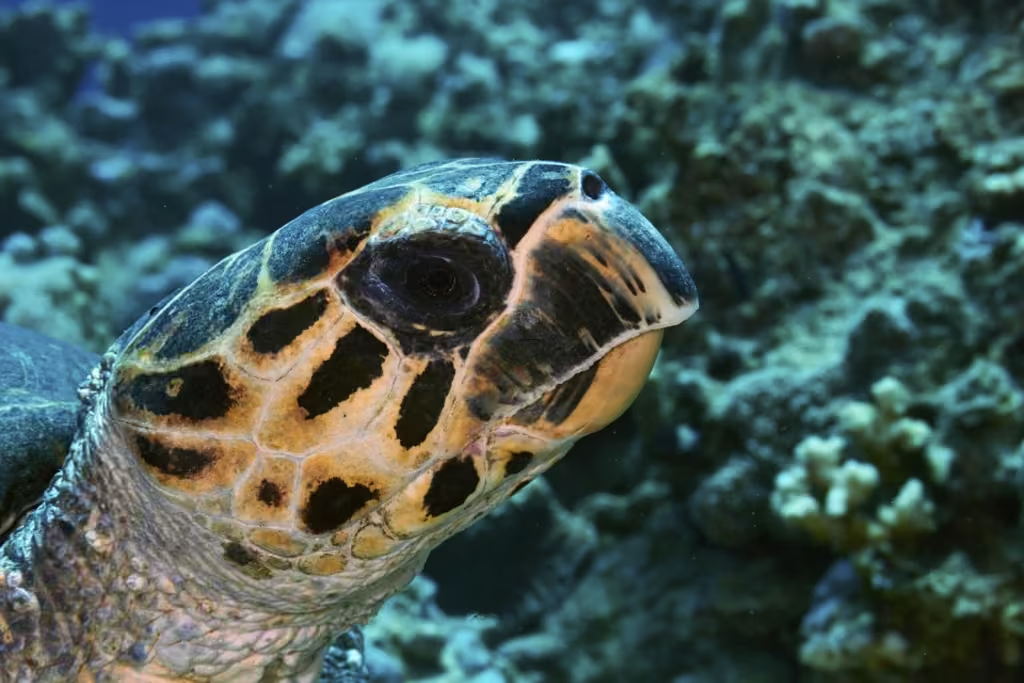
The hawksbill turtle (Eretmochelys imbricata) is another important species found in the Egyptian Red Sea.
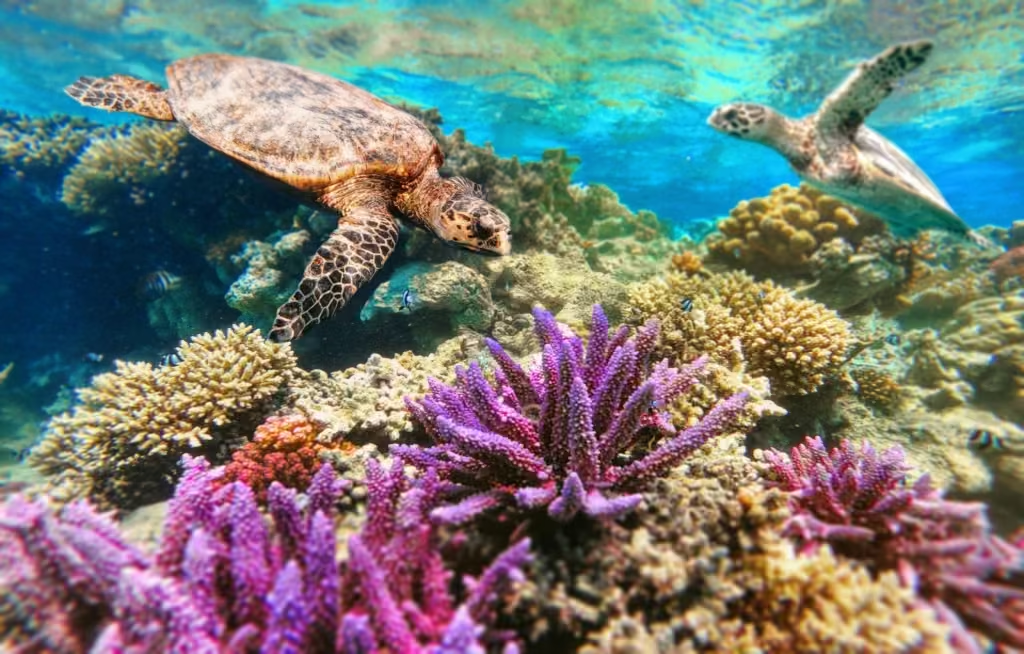
Its narrow, pointed beak helps it reach food in small spaces around coral reefs. Hawksbills feed on a variety of marine organisms, including sponges, and are closely associated with reef environments.
Their shells often have beautiful overlapping scales, which unfortunately made them targets of historical exploitation for the tortoiseshell trade.
Today, hawksbill turtles are protected, but they remain vulnerable to fishing pressure, habitat disturbance and illegal exploitation.
Are There Other Sea Turtle Species in the Red Sea?
Yes. Other species have also been recorded in the wider Red Sea, including loggerhead, olive ridley and leatherback turtles.
However, these species are much less frequently encountered in the region than green and hawksbill turtles. They should not be confused with the two principal nesting species along Egypt’s Red Sea coast.
The Life of a Sea Turtle: From a Sandy Beach to the Open Sea
One of the most remarkable things about sea turtles is that their lives depend on both land and water.
Unlike fish, sea turtles breathe air and must return to the surface to breathe. Female turtles also leave the sea when it is time to lay their eggs.
The Return to the Nesting Beach
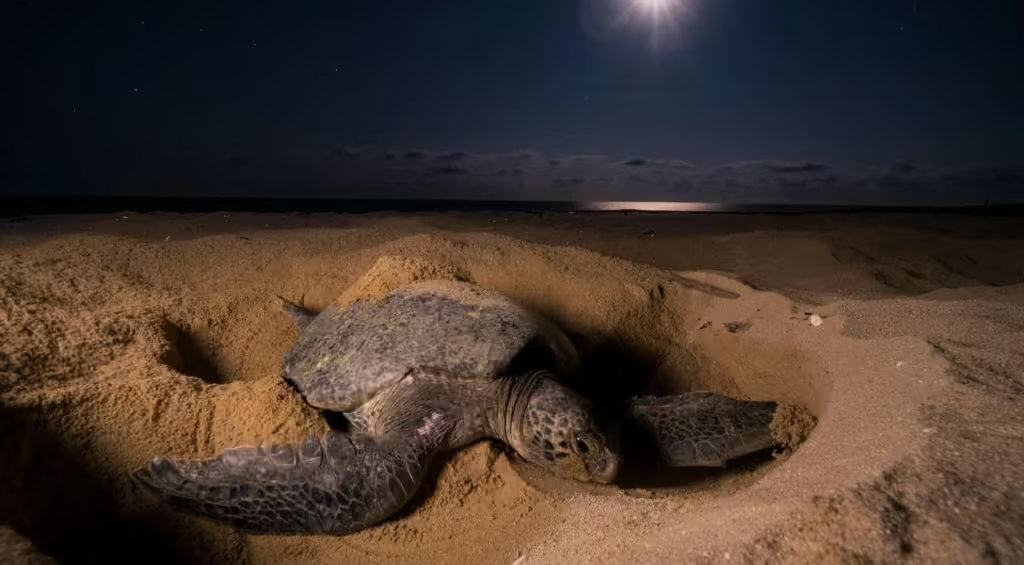
A mature female turtle eventually comes ashore, usually at night, to lay her eggs.
She moves slowly across the sand, finds a suitable location above the high-water line and uses her rear flippers to dig a nest chamber.
After laying her eggs, she covers the nest with sand and returns to the sea.
The entire process requires considerable effort, and the beach must provide suitable conditions for successful incubation.
Eggs and Hatchlings
Sea turtle eggs develop inside the sand. The temperature of the nest influences the development of the embryos and plays an important role in determining the sex of hatchlings.
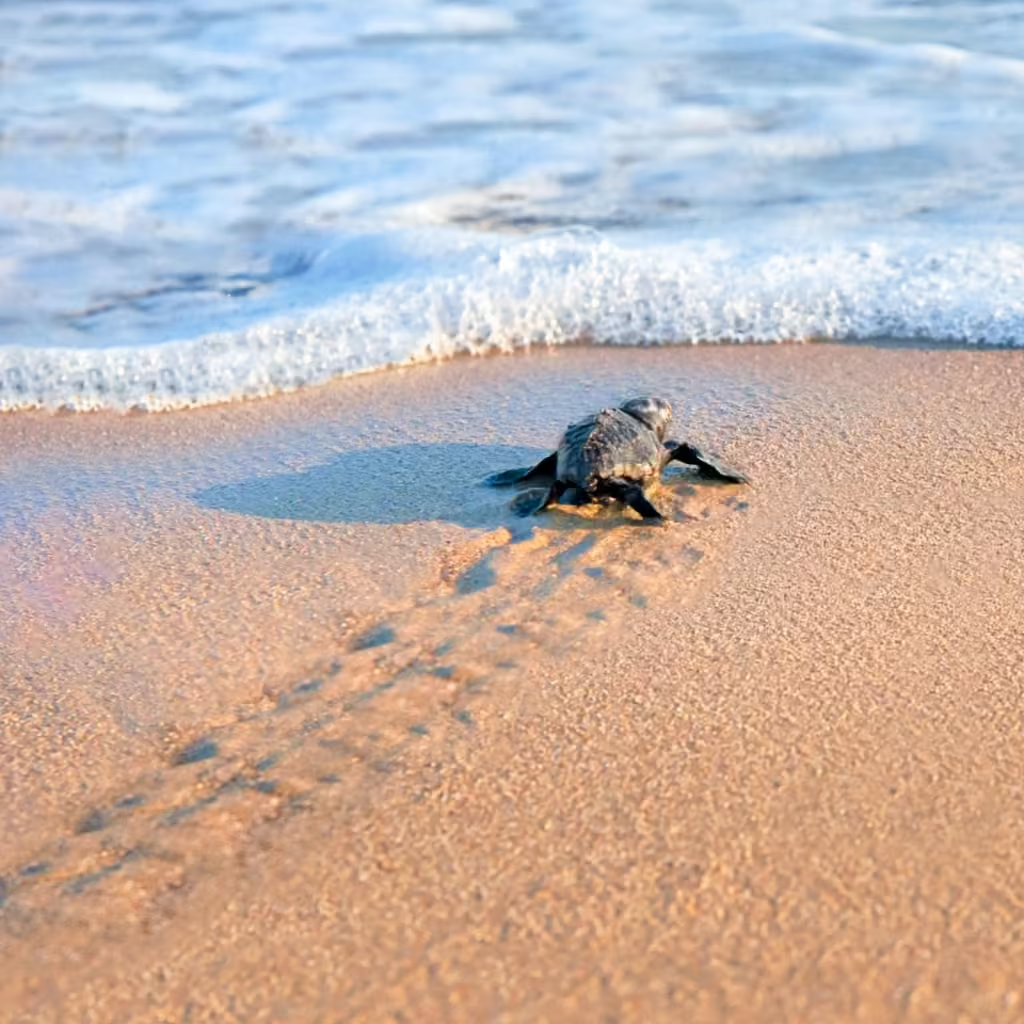
After incubation, young turtles emerge from the nest and make their way towards the sea.
This is one of the most vulnerable stages of their lives. Natural predators, unsuitable lighting, obstacles and human disturbance can all affect their chances of reaching the water safely.
Artificial lights are particularly problematic because hatchlings normally use natural light patterns around the horizon to orient themselves towards the sea.
Growing Up in the Marine Environment
Once hatchlings reach the water, they begin a long and difficult journey.
Young turtles may use different habitats from adults as they grow. Their movements and feeding behaviour can change with age, species and environmental conditions.
Very little of this journey is visible to people watching from the beach, which is one reason scientific tracking and long-term monitoring are so important.
Where Do Sea Turtles Live Along Egypt’s Red Sea Coast?
Sea turtles do not depend on a single type of habitat. Different stages of their lives require different marine and coastal environments.
Egypt’s Red Sea coast offers several important habitats, including nesting beaches, seagrass meadows, coral reefs and offshore waters.
Abu Dabbab Bay and Its Seagrass Meadows
Abu Dabbab, near Marsa Alam, is known for its shallow marine environment and extensive seagrass habitat.
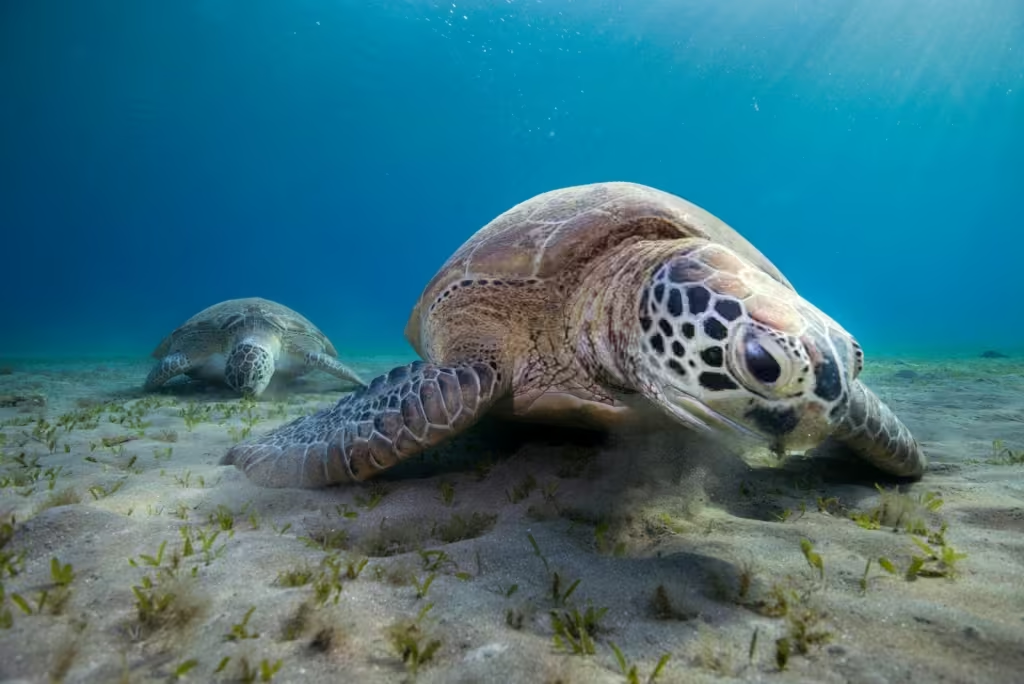
Green turtles feed on seagrass, and the bay is an important location for observing these animals in their natural environment.
However, seeing a turtle is never guaranteed. These are wild animals, and their movements depend on food availability, conditions and individual behaviour.
The bay also illustrates why protecting underwater vegetation is just as important as protecting coral reefs.
The Islands and Nesting Areas of the Southern Red Sea
Several islands and coastal areas in the southern Egyptian Red Sea are important for sea turtle nesting.
Zabargad Island, for example, is recognised as an important green turtle nesting area.
Research has also identified connections between nesting areas and feeding locations. In some cases, turtles move between Egyptian waters and other parts of the Red Sea.
These connections remind us that sea turtle conservation cannot stop at the boundary of one beach or protected area.
Coral Reefs and Coastal Waters
Hawksbill turtles are closely associated with coral reef habitats, where they search for sponges and other food.
Green turtles may also move through reef areas while travelling between feeding and nesting locations.
The health of these environments therefore matters to more than one species. Protecting coral reefs and nearby seagrass meadows helps maintain the wider marine ecosystem.
The Hidden Journey: How Scientists Follow Sea Turtles
For many years, understanding where sea turtles travelled after nesting was difficult.
A turtle could disappear into the sea after laying its eggs, and researchers might not see it again for months or years.
Modern research methods have changed this.
Scientists use techniques such as satellite tracking, flipper tagging and photographic identification to learn more about individual turtles and their movements.
Satellite Tracking Reveals Feeding Grounds
One particularly interesting Red Sea study used satellite tracking of 53 nesting green turtles and identified 38 distinct feeding sites.
The research also demonstrated that tracking the movements of turtles could help researchers locate seagrass meadows that were difficult to identify using satellite imagery alone.
This discovery has an important conservation implication.
A turtle’s movements can reveal the location of underwater habitats that may otherwise receive little attention. In this way, studying the animal also helps scientists understand the ecosystem around it.
Turtles Connect Different Countries
Sea turtles do not recognise national borders.
Some individuals travel between nesting areas and feeding grounds in different parts of the Red Sea. Their movements demonstrate why cooperation between countries is important for protecting marine wildlife.
A nesting beach may be located in one country while an important feeding area lies in another.
Effective conservation therefore requires attention to the entire journey, not only the place where a turtle lays its eggs.
Why Are Sea Turtles Important to the Red Sea Ecosystem?
Sea turtles are not simply beautiful animals living among coral reefs. They also have important ecological roles.
Green Turtles and Seagrass Meadows
Green turtles feed on seagrass, and their grazing can influence the structure and condition of seagrass meadows.
Healthy seagrass habitats provide shelter and nursery areas for fish and invertebrates. They also help stabilise sediments, improve water quality and store carbon.
These underwater meadows are valuable ecosystems in their own right, even though visitors rarely notice them from the surface.
Hawksbill Turtles and Coral Reef Life
Hawksbill turtles feed on sponges and other organisms associated with coral reefs.
Their feeding behaviour forms part of the ecological relationships that shape reef communities.
A healthy reef is not just a collection of colourful corals. It is a living system in which many organisms interact.
Protecting More Than One Animal
When we protect sea turtles, we also need to protect the habitats they depend on.
That includes nesting beaches, seagrass meadows, coral reefs and the coastal waters connecting them.
This is why marine conservation is most effective when it considers entire ecosystems rather than focusing on a single species.
What Threatens Sea Turtles in the Egyptian Red Sea?
Despite their ability to travel long distances, sea turtles face several serious challenges.
Some threats occur in the water, while others begin on beaches and coastal land.
Fishing Equipment and Accidental Capture
Sea turtles can become trapped in fishing nets or tangled in discarded fishing equipment.
They must reach the surface to breathe, so becoming entangled underwater can be particularly dangerous.
A 2025 scientific study examining injury and mortality records from the Egyptian Red Sea identified fishing as a major source of turtle mortality.
Boat Strikes
Boat traffic creates another risk, particularly in busy coastal areas.
A moving boat can injure a turtle swimming near the surface. Research published in 2025 reported higher boat-strike rates among turtles recorded near Hurghada than in some less urbanised areas.
This is an important reminder that responsible boating is not only about passenger safety. It also affects the wildlife sharing the same waters.
Artificial Light on Nesting Beaches
Light pollution is a less obvious threat.
Female turtles approaching a nesting beach can be affected by artificial lighting, while hatchlings may become disoriented by bright lights near the shore.
A 2024 study of Egyptian Red Sea nesting beaches found that the probability of historical nesting decreased as light intensity increased.
Coastal development can therefore affect turtle nesting even when buildings and lights are not directly on the beach.
Plastic Pollution and Marine Waste
Plastic bags, fishing lines and other discarded materials can harm sea turtles.
Animals may swallow plastic by mistake or become entangled in waste floating in the water.
Keeping beaches and marine habitats clean is a simple but important part of protecting these animals.
Coastal Development and Habitat Loss
Construction, increased boat activity and changes to natural beaches can affect nesting and feeding habitats.
The loss or degradation of seagrass meadows and coral reefs also reduces the quality of important feeding areas.
Protecting sea turtles means considering how coastal development affects the entire marine environment.
How Can Visitors Help Protect Sea Turtles?
A visitor does not need to be a marine biologist to make a positive difference.
Small actions can help reduce disturbance and protect the places where turtles live.
- Never touch, chase, feed or attempt to ride a wild sea turtle.
- Keep a respectful distance when observing turtles underwater.
- Avoid standing on seagrass meadows or coral formations.
- Do not block a turtle’s path to the surface.
- Never leave plastic, fishing line or other rubbish on the beach or in the sea.
- Follow local protected-area rules and instructions from qualified guides.
- Avoid using bright lights around nesting beaches at night.
- Choose marine operators who respect wildlife and do not encourage forced interactions.
If you see an injured or entangled turtle, avoid handling it yourself. Report the location to the relevant local environmental authorities or marine conservation organisation.
Respecting a turtle’s space is more valuable than getting a close photograph.
A Different Way to Look at the Red Sea
It is easy to think of the Red Sea as a place of beaches, sunshine, coral reefs and clear water.
But beneath the surface lies a much more complicated world.
A green turtle feeding in a seagrass meadow may have travelled from a distant nesting area. A hawksbill turtle searching around a coral reef is part of a complex relationship between marine organisms. A sandy beach that appears empty during the day may become an important nesting place at night.
Scientific research is gradually revealing these hidden connections.
Perhaps the most interesting lesson is that protecting sea turtles is not only about saving an individual animal. It is about understanding and protecting the entire journey: the beach where life begins, the waters where young turtles grow, the feeding grounds that sustain adults and the routes connecting them all.
The next time you see a sea turtle in the Egyptian Red Sea, remember that you may be looking at a traveller whose journey began hundreds of kilometres away.
Frequently Asked Questions About Sea Turtles of the Red Sea
1. What species of sea turtles live in the Red Sea?
Green turtles and hawksbill turtles are the two principal nesting species along Egypt’s Red Sea coast. Other species, including loggerhead, olive ridley and leatherback turtles, have also been recorded in the wider region but are much less frequently encountered.
2. Where can you see sea turtles in Egypt?
Sea turtles can be encountered in several areas along Egypt’s Red Sea coast. Abu Dabbab near Marsa Alam is particularly known for green turtles and its seagrass habitat. Sightings are never guaranteed because these are wild animals.
3. Are there sea turtles in Hurghada?
Yes. Sea turtles have been recorded in the waters around Hurghada and the northern Egyptian Red Sea. They may be seen around reefs and other suitable coastal habitats, although sightings depend on location and natural conditions.
4. What is the difference between green turtles and hawksbill turtles?
Green turtles generally have a rounded head and feed mainly on seagrass and algae as adults. Hawksbill turtles have a narrower, pointed beak and are strongly associated with coral reef habitats, where they feed on sponges and other marine organisms.
5. When do sea turtles lay eggs in Egypt?
Nesting activity varies by species and location. Green and hawksbill turtles nest along parts of the Red Sea coast, generally during warmer months. Exact nesting periods and activity can vary from year to year.
6. Do sea turtles return to the same beach to lay eggs?
Many female sea turtles show nesting-site fidelity and may return to the region where they originally hatched or previously nested. However, they can also use more than one nesting beach, and their movements are not identical.
7. What do sea turtles eat in the Red Sea?
Green turtles feed mainly on seagrass and algae as adults. Hawksbill turtles eat sponges and other organisms associated with coral reefs. Diets can vary with age, habitat and food availability.
8. Why are sea turtles important to coral reefs and seagrass beds?
Green turtles influence seagrass meadows through grazing, while hawksbill turtles feed on reef-associated organisms such as sponges. Both species form part of the ecological relationships that help shape marine habitats.
9. Are sea turtles endangered?
Sea turtle conservation status varies by species and population. Green turtles and hawksbill turtles face threats including fishing, habitat loss, pollution, coastal development and disturbance of nesting beaches. Both require continued conservation efforts.
10. How can tourists help protect sea turtles?
Visitors can avoid touching or feeding turtles, maintain a respectful distance, follow local wildlife guidelines, avoid damaging seagrass and coral, reduce plastic waste and respect nesting beaches at night.
Further Reading: Sea Turtle Research and Conservation
For readers interested in the scientific work behind this article, the following resources offer useful research and conservation information:
- HEPCA – Turtles of the Red Sea: Learn about turtle feeding grounds, nesting habitats and conservation activities in Egypt.
- Research on Green Turtle Tracking in the Red Sea: Discover how satellite tracking helped researchers identify important seagrass feeding sites.
- Sea Turtle Nesting and Light Pollution in Egypt: Explore scientific research on artificial lighting and nesting beaches along the Egyptian Red Sea.
- Sea Turtle Injuries and Mortality in the Egyptian Red Sea: Read about research into fishing impacts, boat strikes and other human-related threats.
Discover More About the Red Sea
The sea turtles of Egypt are part of a remarkable natural environment that extends far beyond the visible beauty of its coral reefs.
Their journeys connect beaches, islands, seagrass meadows and underwater habitats across the Red Sea. Understanding these connections is an important step towards protecting the wildlife that makes this region so special.
This article is presented by Private Taxi Hurghada, a local airport transfer service based in Hurghada, Egypt, sharing useful information and local insights about the Red Sea region.
 English
 German