
The Red Sea Coral Reefs: One of the World’s Most Fascinating Marine Ecosystems
Marine Life & Underwater Wonders
Home → Red Sea Discoveries → Red Sea Coral Reefs
The Red Sea Coral Reefs: One of the World’s Most Fascinating Marine Ecosystems
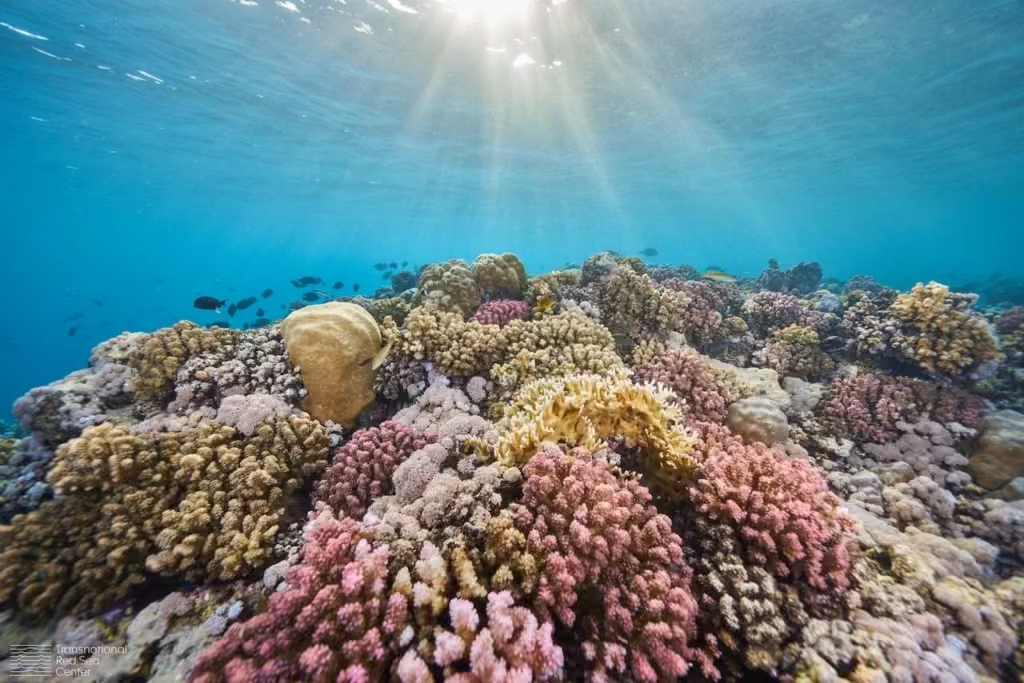
Beneath the clear blue waters of Egypt’s Red Sea lies an extraordinary underwater world. Colourful coral formations, tropical fish, sea turtles and countless other marine organisms create one of the region’s most fascinating natural environments.
The Red Sea is particularly well known for its extensive coral reef systems, which support a remarkable variety of marine life. These reefs are not simply beautiful underwater landscapes. They are living ecosystems that provide food, shelter and breeding habitats for many marine species.
But what makes the Red Sea coral reefs so special, how do they develop, and why are they important to the marine environment?
Let’s explore the underwater world of the Red Sea.
Where Are the Red Sea Coral Reefs Located?
The Red Sea stretches between northeastern Africa and the Arabian Peninsula, connecting to the Mediterranean Sea through the Suez Canal and to the Gulf of Aden through the Bab el-Mandeb Strait.
Along Egypt’s eastern coastline, coral reefs can be found in many areas, from the northern Gulf of Suez towards Hurghada, Safaga, Marsa Alam and further south.
Some reefs grow close to the coastline, while others form offshore reef systems surrounded by deeper water.
The Egyptian Red Sea coast is particularly interesting because its underwater landscapes include:
- Fringing reefs close to the shore.
- Offshore reefs surrounded by deeper water.
- Coral gardens with diverse formations.
- Seagrass meadows in sheltered coastal bays.
- Sandy seabeds and rocky underwater habitats.
Each environment supports different marine organisms and contributes to the region’s biodiversity.
What Exactly Are Coral Reefs?
Coral reefs are living marine structures created primarily by tiny animals called coral polyps.
Although corals may look like colourful underwater plants or rocks, they are actually animals belonging to the group Cnidaria.
Individual coral polyps produce calcium carbonate skeletons. Over many generations, these skeletons accumulate and form the complex structures we recognise as coral reefs.
Many reef-building corals also live in a close relationship with microscopic algae called zooxanthellae.
These algae live within coral tissues and use sunlight to produce energy through photosynthesis. In return, corals provide them with shelter and access to nutrients.
This relationship helps many corals grow and build the reef structures that support other marine organisms.
Different Types of Coral Formations
Corals come in many shapes, sizes and structures.
Some common forms include:
- Branching corals: Resemble underwater trees and provide shelter for small fish.
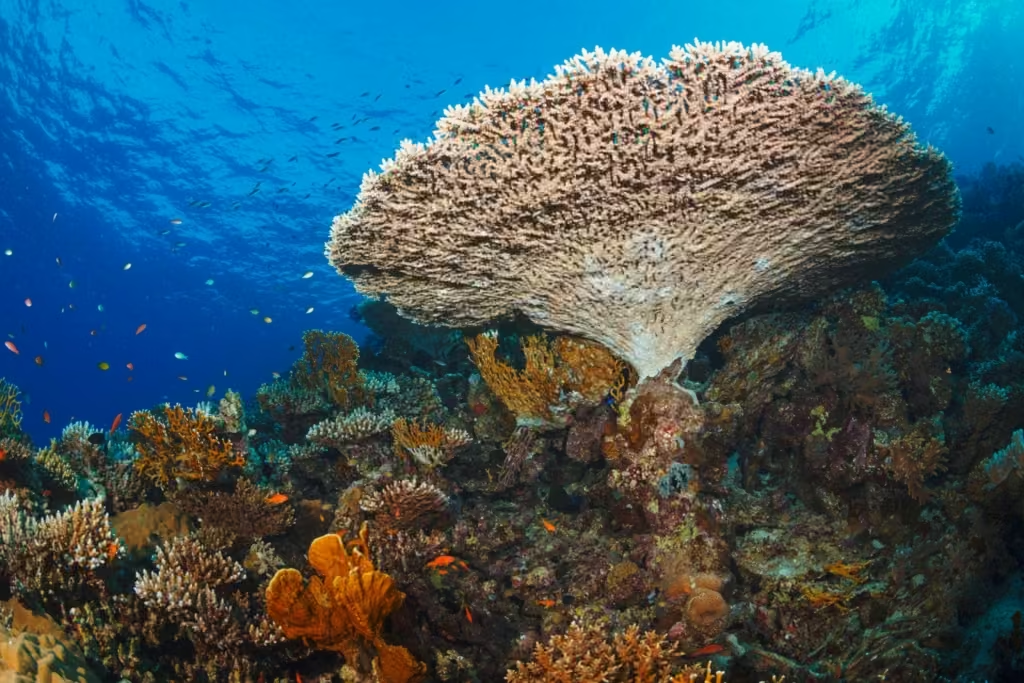
- Table corals: Grow into broad, horizontal formations that create shaded spaces.
- Brain corals: Have rounded surfaces with winding patterns resembling a brain.
- Plate corals: Develop flat or layered structures that extend over the reef.
- Massive corals: Form large, solid structures that can grow over many decades.
Together, these formations create a complex underwater environment with numerous hiding places and feeding areas.
The Incredible Marine Life of the Red Sea
One of the most fascinating aspects of the Red Sea is its marine biodiversity.
Coral reefs provide food, protection and breeding habitats for a wide variety of marine organisms.
Colourful Reef Fish
The reefs around Egypt are home to many tropical fish species.
Among the fish commonly associated with Red Sea coral reefs are:
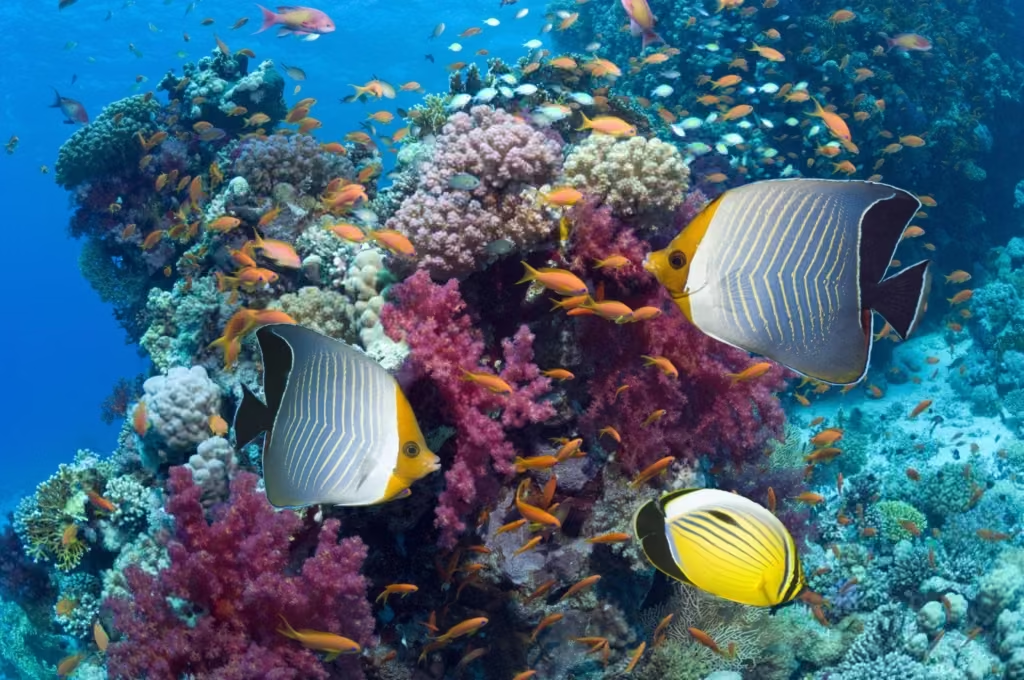
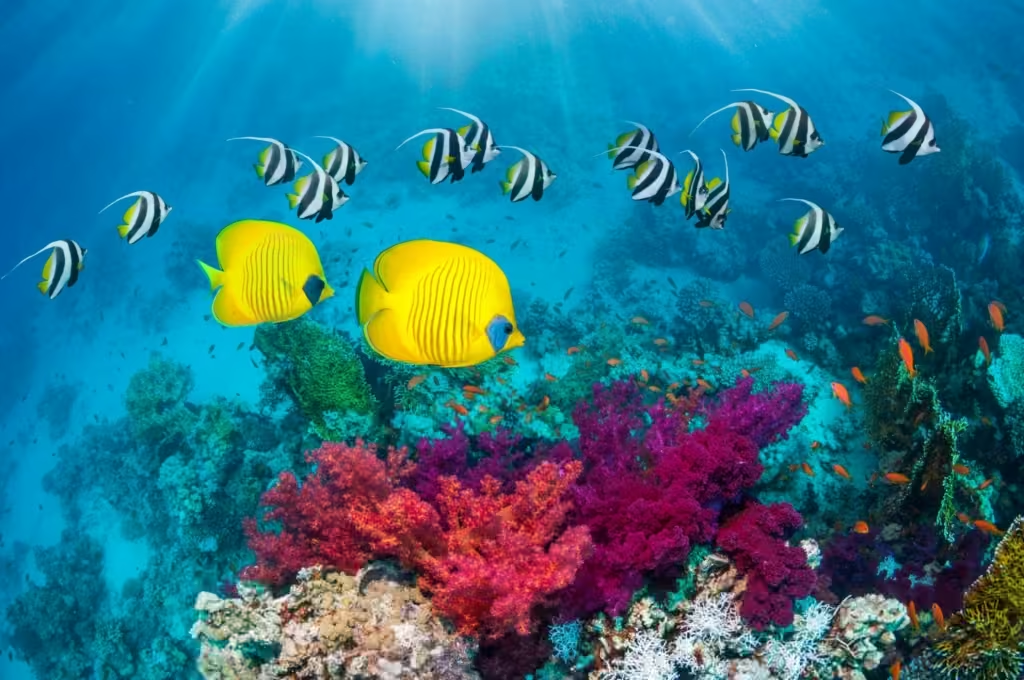
- Butterflyfish.
- Angelfish.
- Parrotfish.
- Clownfish.
- Surgeonfish.
- Damselfish.
- Lionfish.
Some feed on algae, others search for small invertebrates, while many depend on coral structures for protection.
Their colours and different swimming behaviours make the underwater environment particularly interesting to observe.
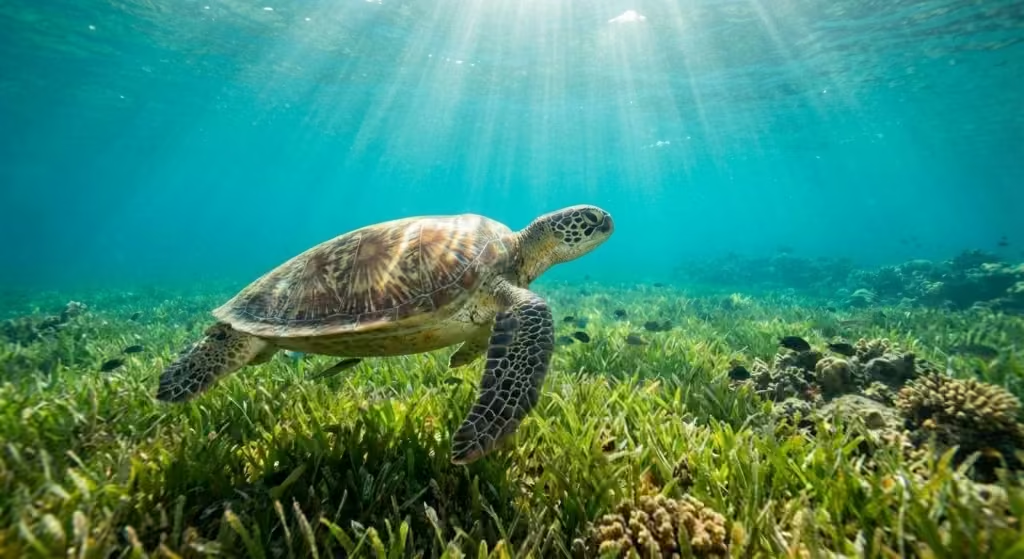
Sea Turtles
Sea turtles are another fascinating part of the Red Sea’s marine environment.
Green turtles and hawksbill turtles can be found in parts of the Egyptian Red Sea.
Green turtles often feed on seagrass and algae, while hawksbill turtles are known for feeding on sponges and other reef organisms.
Healthy seagrass meadows and coral reef habitats are important for maintaining suitable environments for these animals.
Sea turtles depend on more than one type of marine habitat throughout their lives. Their movements between feeding grounds, coral reefs and nesting beaches reveal how closely connected the Red Sea’s ecosystems really are. Discover more in our detailed guide to the Sea Turtles of the Red Sea.
Dolphins and Other Marine Animals
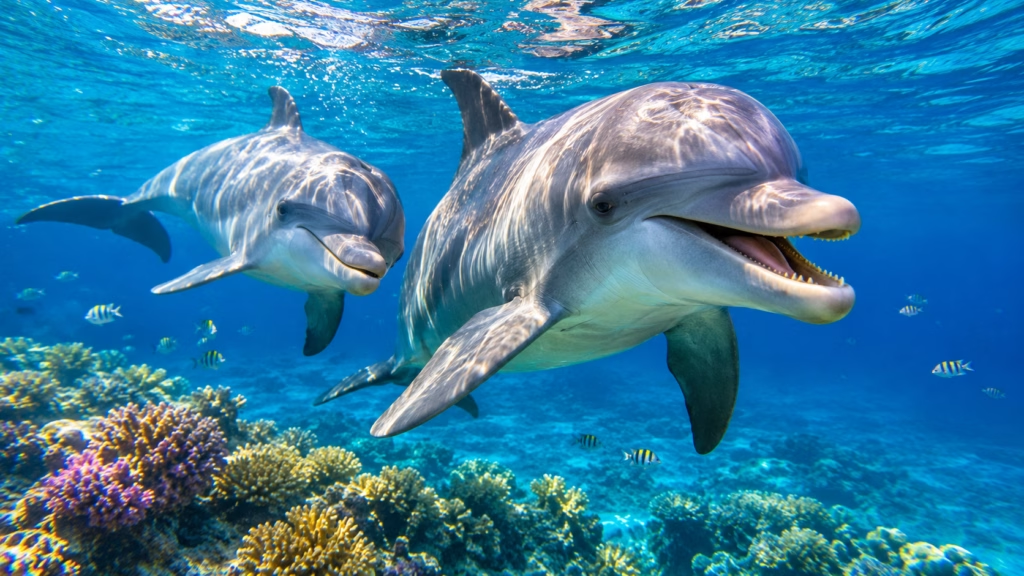
Several dolphin species inhabit the Red Sea.
Bottlenose dolphins and spinner dolphins are among those encountered in the region.
The surrounding marine environment also supports rays, moray eels, octopuses, crustaceans and many other fascinating creatures.
Every species plays a role in maintaining the balance of this underwater ecosystem.
Why Are Coral Reefs Important?
Coral reefs are among the most biologically productive marine ecosystems.
Although they cover a relatively small part of the ocean floor, they support an impressive diversity of marine life.
Their importance extends far beyond their appearance.
1. They Provide Shelter for Marine Life
The complicated structure of a coral reef creates countless spaces where fish and smaller marine animals can hide from predators.
Reef formations also provide feeding grounds, breeding areas and habitats for many species.
2. They Support Marine Food Chains
Coral reef ecosystems contain organisms with different feeding habits.
Some fish eat algae, others feed on plankton or small invertebrates, while larger predators depend on smaller fish for food.
These relationships help maintain the ecological balance of the reef.
3. They Help Protect Coastal Areas
Reef structures can reduce wave energy before it reaches the coastline.
By absorbing and dispersing some of the force of incoming waves, healthy coral reefs can contribute to protecting coastal environments from erosion and wave damage.
4. They Support Tourism and Local Communities
Coral reefs attract snorkellers, divers, photographers and nature enthusiasts from around the world.
In Egypt, marine tourism is an important part of the Red Sea region’s economy.
Healthy reefs support tourism activities while also providing long-term environmental value to coastal communities.
Why Are Red Sea Coral Reefs Considered Special?
The Red Sea has several environmental characteristics that make its coral reef ecosystems particularly interesting.
Its geographical location, relatively isolated marine environment and different local conditions have contributed to the development of distinctive marine communities.
Some Red Sea coral populations have also demonstrated notable tolerance to elevated water temperatures compared with many other coral populations worldwide.
However, this does not mean that Red Sea reefs are protected from climate change or environmental damage.
Marine Biodiversity and Endemic Species
The Red Sea contains marine species that are found nowhere else in the world.
This makes the region particularly important for marine research and biodiversity conservation.
Its combination of coral reefs, seagrass habitats, sandy seabeds and deeper marine environments supports a wide variety of organisms.
The Biggest Threats Facing Coral Reefs
Despite their beauty and ecological importance, coral reefs face several environmental pressures.
Rising Sea Temperatures
One of the most serious threats is increasing ocean temperature.
When corals experience prolonged heat stress, they may lose the microscopic algae living within their tissues.
This process is known as coral bleaching.
Bleached corals appear pale or white because their transparent tissues reveal the white skeleton underneath.
Bleaching does not always mean that a coral is dead, but prolonged stress can cause serious damage and increase the risk of mortality.
Pollution and Plastic Waste
Plastic waste, untreated wastewater and other forms of pollution can damage marine habitats.
Pollution can affect water quality, harm marine animals and place additional stress on coral ecosystems.
Physical Damage
Corals are fragile living organisms.
Anchors, careless diving, touching coral formations and standing on reefs can cause physical damage.
Even small disturbances can take a long time to recover, depending on the coral species and environmental conditions.
Overfishing and Ecological Imbalance
Unsustainable fishing practices can disturb the natural balance of reef ecosystems.
Removing important species can affect food chains and allow certain organisms to become more dominant.
Protecting marine biodiversity is therefore essential for the long-term health of coral reefs.
How Can Visitors Help Protect the Red Sea Coral Reefs?
Visitors can enjoy the underwater beauty of the Red Sea while helping to protect its natural environment.
Simple actions can make a difference.
- Never stand on or touch coral formations.
- Avoid collecting coral, shells or other marine organisms.
- Use reef-safe practices and follow local environmental guidance.
- Never feed wild fish or other marine animals.
- Avoid leaving plastic waste on beaches or boats.
- Follow instructions from responsible diving and snorkelling guides.
- Respect marine protected areas and local conservation rules.
Responsible tourism helps reduce unnecessary pressure on sensitive marine habitats.
responsible travel in Hurghada
Further Reading: Coral Reef Research and Conservation
If you would like to learn more about coral reef ecosystems, marine biodiversity and conservation efforts, the following organisations provide valuable scientific information and educational resources.
- NOAA – Coral Reef Ecosystems: Learn how coral reefs develop, support marine life and contribute to healthy coastal environments.
- PERSGA – Marine Biodiversity: Explore the unique marine ecosystems and biodiversity of the Red Sea and Gulf of Aden.
- UNEP – Coral Reef Conservation: Discover the environmental challenges facing coral reefs and international conservation efforts.
- IUCN – Coral Reef Assessment: Learn about the latest scientific assessment of global coral reef ecosystems and the threats they face.
1. Why are the Red Sea coral reefs so special?
The Red Sea coral reefs are known for their remarkable marine biodiversity, colourful coral formations and diverse fish species. Some coral communities in the region have also attracted scientific interest because of their ability to tolerate relatively high water temperatures.
2. Where can you see coral reefs in Egypt?
Coral reefs can be found along much of Egypt’s Red Sea coastline, including areas around Hurghada, El Gouna, Safaga, Marsa Alam and the southern Red Sea. Some reefs are accessible from the shore, while others can be explored by boat.
3. What marine animals live around Red Sea coral reefs?
The reefs provide habitats for many marine animals, including tropical reef fish, sea turtles, moray eels, rays and various invertebrates. Dolphins also inhabit parts of the Red Sea, although they are not coral reef animals themselves.
4. Can beginners go snorkeling over Red Sea coral reefs?
Yes. Many locations offer relatively shallow reef areas suitable for beginners. However, conditions vary between sites, so visitors should choose a suitable location, follow local safety guidance and snorkel with appropriate supervision when needed.
5. Are Red Sea coral reefs endangered?
Yes. Coral reefs face several threats, including rising sea temperatures, pollution, coastal development, physical damage and unsustainable fishing. The level of risk varies between locations, making responsible tourism and conservation important.
6. What is the best way to protect coral reefs while snorkeling?
Avoid touching or standing on corals, never collect coral fragments or marine animals, use reef-safe practices where appropriate, and keep a safe distance from wildlife. Good buoyancy and careful fin movements also help prevent accidental damage.
7. Can you see sea turtles around Egypt’s Red Sea coast?
Yes. Green sea turtles and hawksbill turtles are found in the Red Sea. They may be observed around coral reefs and seagrass habitats in some areas, but sightings are never guaranteed.
8. Do coral reefs grow quickly?
No. Most reef-building corals grow slowly, often only a few centimetres per year, although growth rates vary considerably depending on the species and environmental conditions. This is one reason damaged reefs can take a long time to recover.
Discover the Underwater World of Egypt’s Red Sea
From colourful coral gardens to fascinating tropical fish, the Red Sea offers an extraordinary natural environment.
Whether you are interested in marine biology, underwater photography or simply learning about the natural world, its coral reefs provide endless opportunities for discovery.
These ecosystems are valuable not only because of their beauty but also because of the important role they play in supporting marine biodiversity and coastal environments.
Understanding how coral reefs function and recognising the challenges they face are important steps towards protecting them for future generations.
The Red Sea is more than a beautiful holiday destination. It is a living marine ecosystem worth understanding and preserving.
This article is presented by Private Taxi Hurghada, a local airport transfer service based in Hurghada, Egypt, sharing useful information and local insights about the Red Sea region.
 English
 German